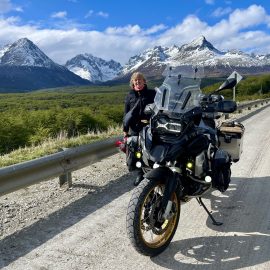
That’s how we pronounce it.
Just giving you a little bit of language tuition at no cost. No need to thank me, I know you’re grateful when I share.
Our first stop in Mehico was Tapachula. We soon recognised there were security issues in the area because we were processed through more than 25 paramilitary checkpoints.
In this area, the UK Govt. advises against all but essential travel and the US Govt advises against travel due to risks of crime and kidnapping.
Our travel in this area could be considered ‘essential’ as we were obliged to ride up and down the ‘danger’ area to reach the alternative border for our bike import permit. Thanks Mehico!
At each checkpoint we’re slowed by ‘topes’ which are suspension killing speed bumps. The topes in Central America are monstrous and regularly scrape the protective guard on the bottom of the bike engine. They’re deadly and you go slow, very slow, for a tope.
They even have topes on dual carriageways with no highlighted markings. They’ look just like a normal road surface from a distance – try seeing them when travelling at 80kmph!
The security checkpoints are staffed by military guys with machine guns. Often there’s also a chap pointing a hefty mounted machine gun at us. It all feels very intimidating and not safe.
I appreciate it’s better to have security than not and they rarely stop us. If they do I think it’s usually out of curiosity and after producing our documents and a cursory search we’re on our way.
From Tepachula we did some long days on the bike. The roads are better in Mehico and we rolled along nicely.
The road from Tehuantepec towards Oaxca was a stunning motorcycle road. 170km of motorcycle heaven over mountains, climbing over 10,000 feet with 54 bridges and 12 tunnels. Hardly a straight in sight and an average speed of about 55mph if you’re not faint hearted.
The road was only fully opened earlier this year and it’s wonderful. Perhaps the best motorcycle road I’ve ever ridden and all credit to Susan for taking it all in her stride. She’s as awesome as the road.
We reached Oaxaca. Now that’s pronounced wa-HA-ka. Again I’m happy to pass on my knowledge of Spanish. When a friend gains from my knowledge it’s no loss.
wa-HA-ka is recognised as the food capital of Mehico. That nicely brings us to the point where I’ve said too much and it’s time for a photo.
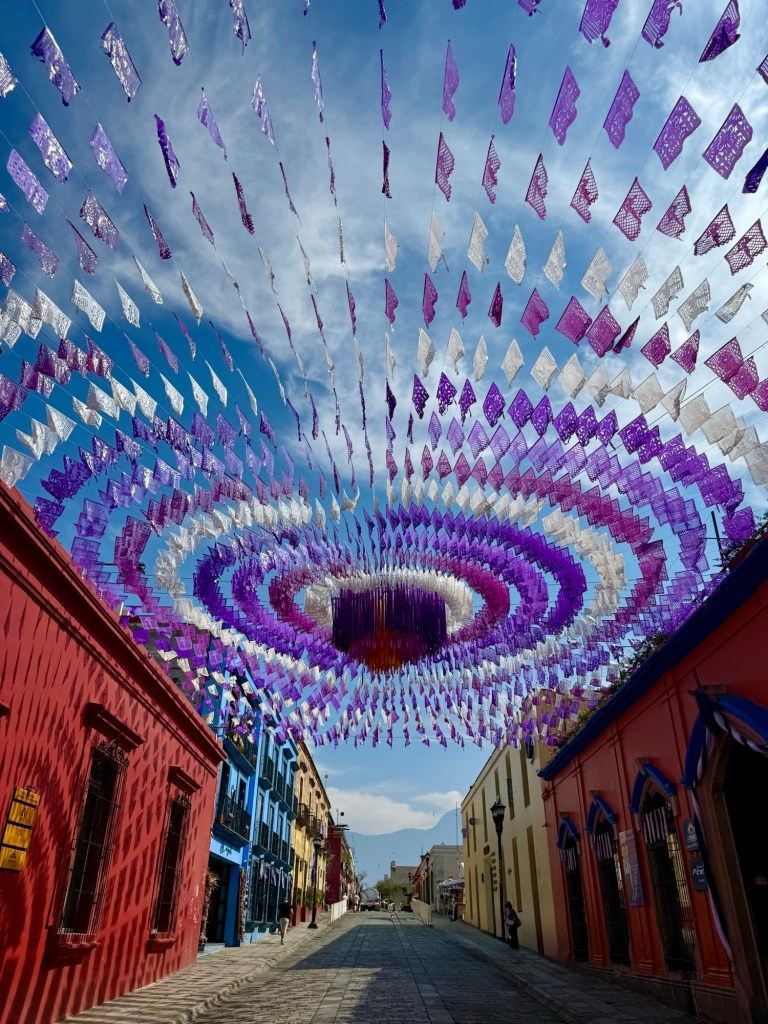
Yes, I know you expected a photo of food but you shouldn’t expect the expected. It’s a photo of a wa-HA-ka street.
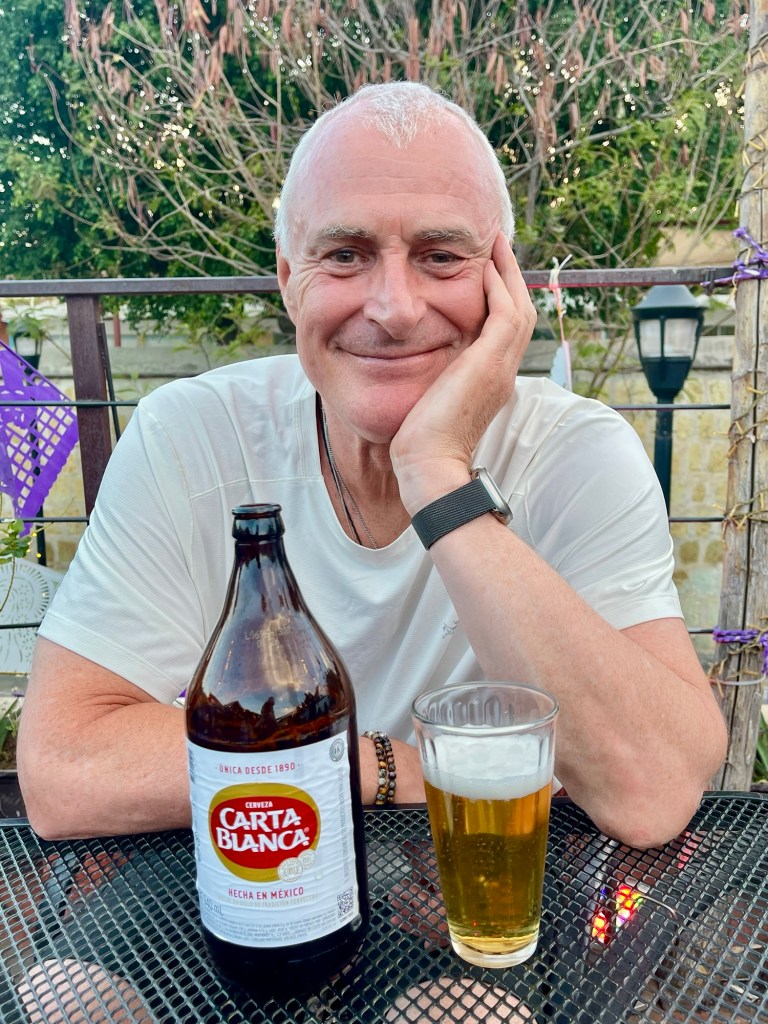
Okay, here’s something better. It’s me with a 950ml bottle of beer. Doesn’t get much better than that! The beer I’m talking about, the beer!
You want more? Here’s Susan with a tiny glass of beer.
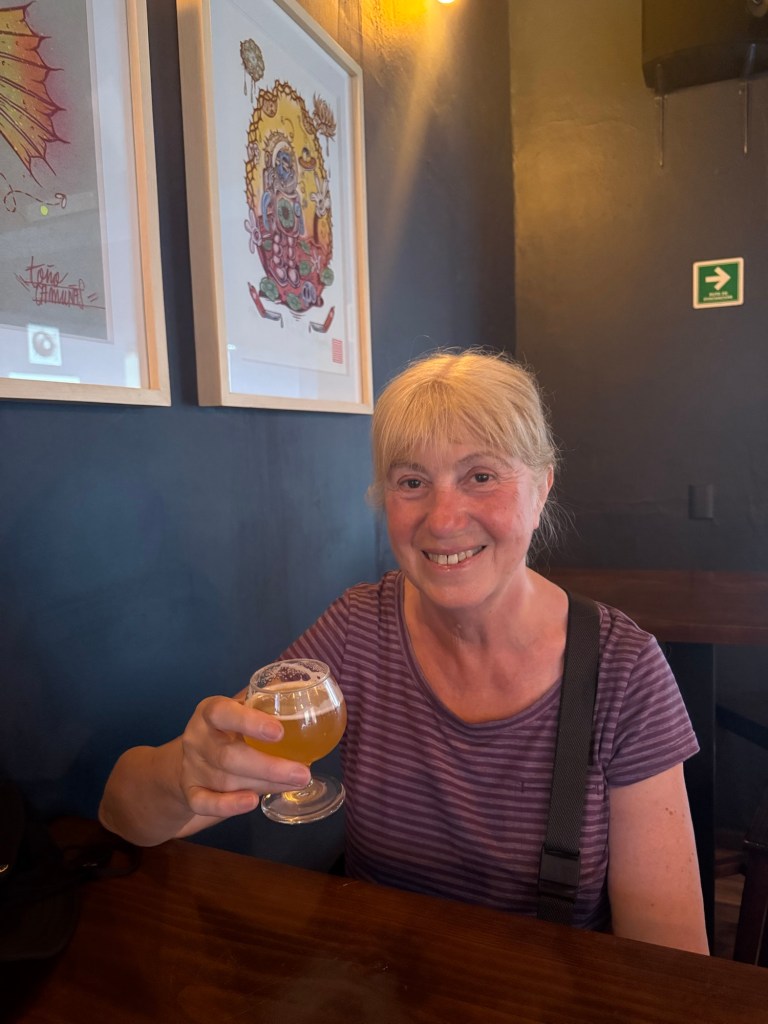
Now that’s not so good! The beer I’m talking about, the tiny glass of beer!
What else can I show you?
How about a mural or two?

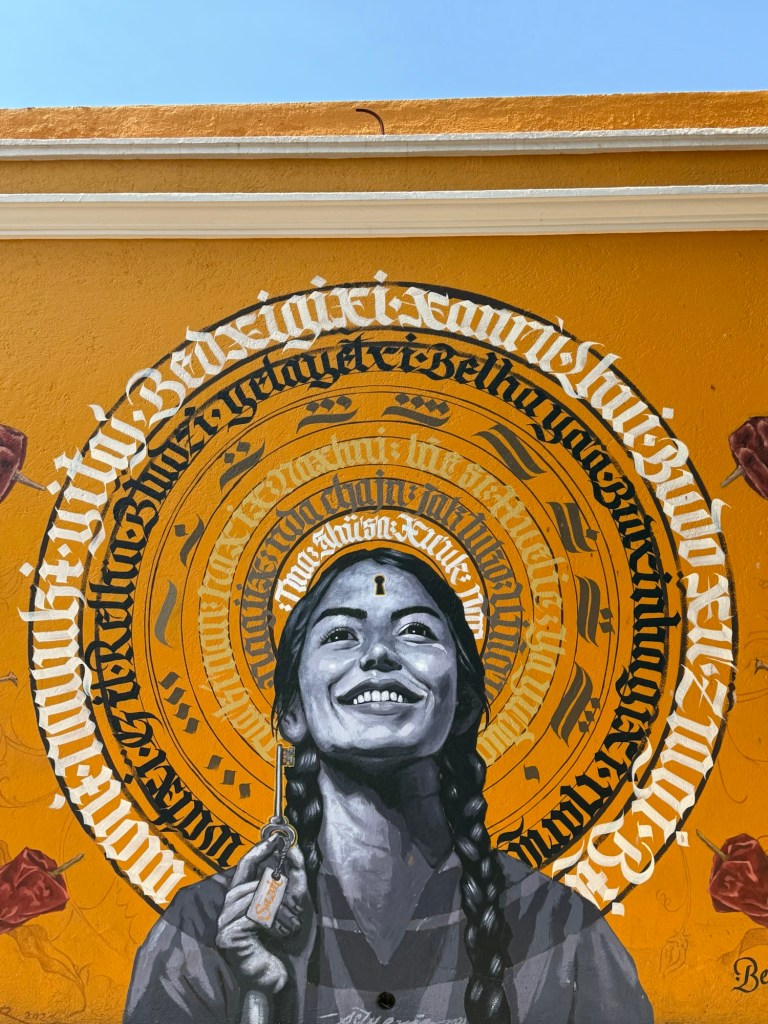
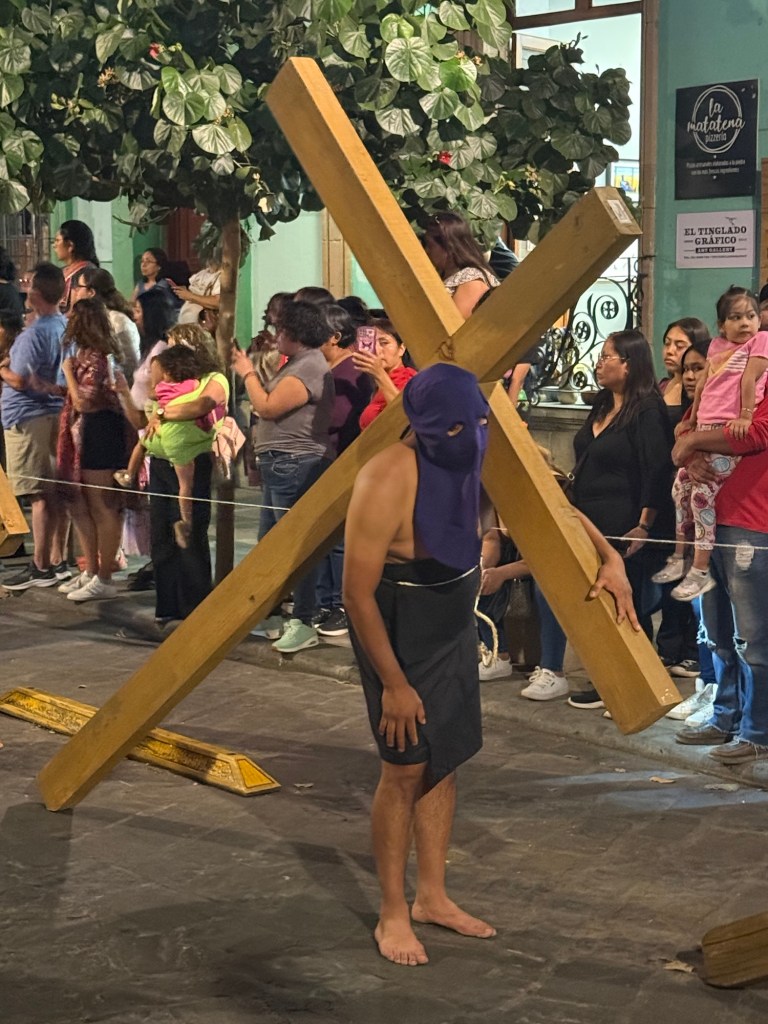
Yes, yes all very nice but I know what you’re really thinking? ‘Come on Clif it was Easter weekend when you were in wa-HA-ka and we want to see a guy with a cross’.
Okay here’s a guy in the ‘Silent Procession’. Susan loved it but I found the whole ‘silent’ thing a bit of a challenge.
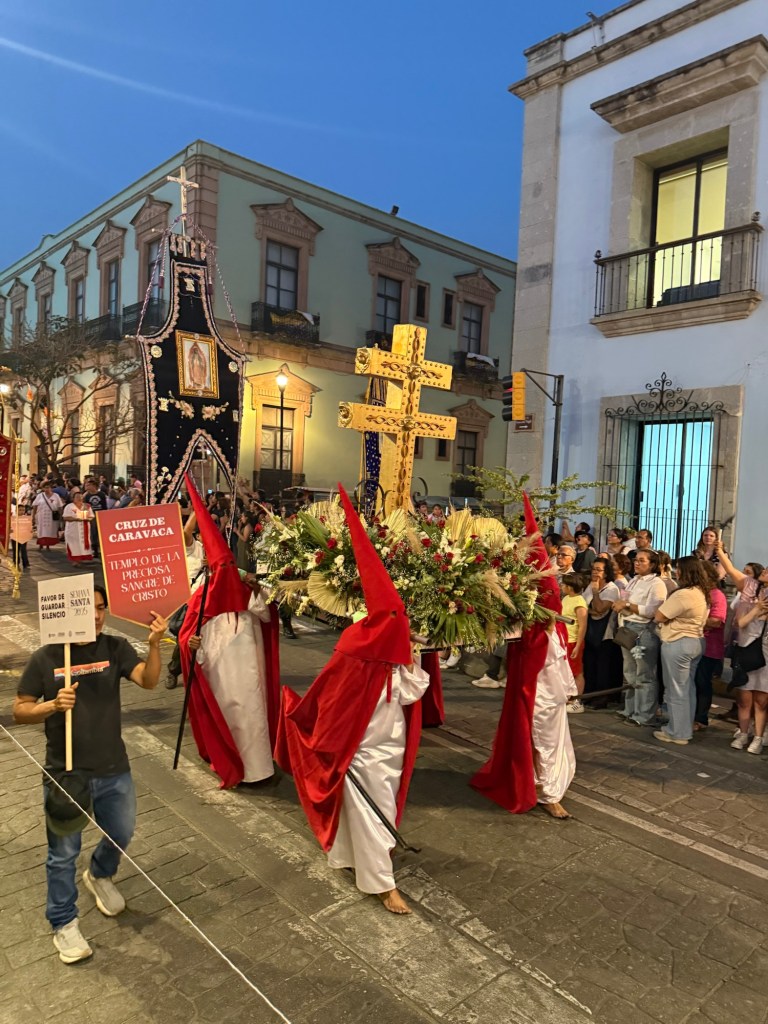
Here’s some more silent people. Shhhh shhh!
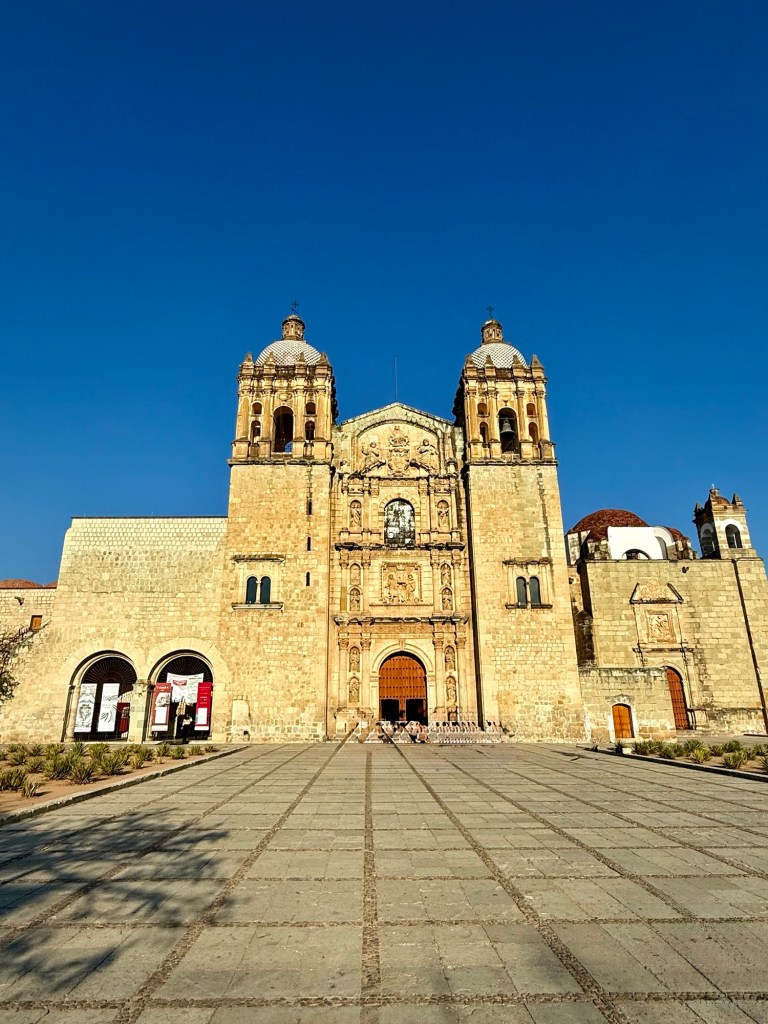
And while we’re being religious on what was Easter weekend, how about if I throw in a 16th century Spanish Cathedral.
Oh I did mention food, didnt I?
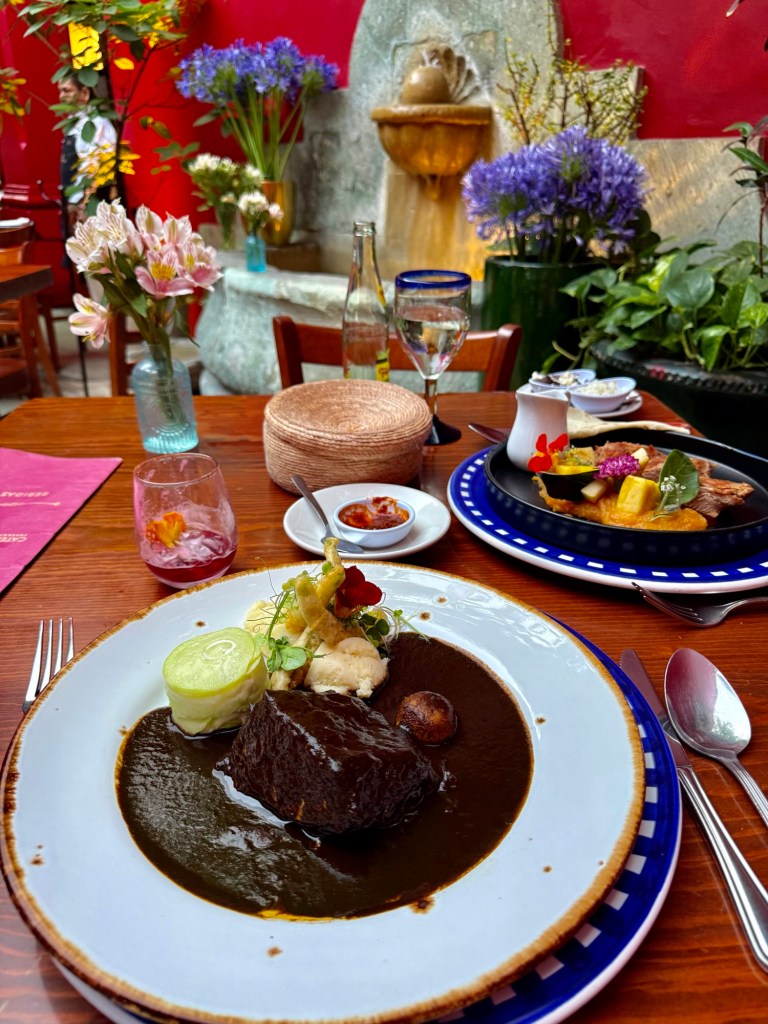
Here’s lovely shin of beef in the famous mole poblano. Mole is a big deal in this part of the world. Some are reasonable, some are a bit too sweet for my liking. The mole poblano is fine.
Now I’m going to ask you a history question – who’s this guy?
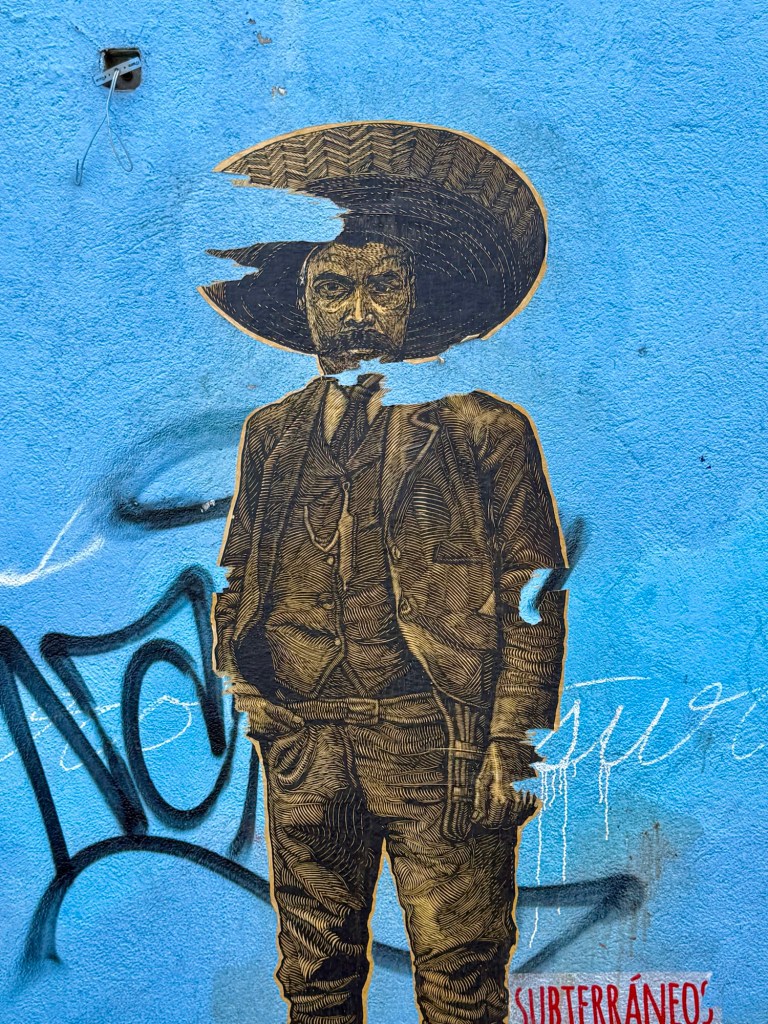
Well of course, this is Pancho Villa. I’m sure you will have heard of him but let me add a little background.
Pancho is considered to be one of the most widely known Mehicans of all time throughout the world. If I told you who the other top famous Mehicans were there’s a good chance you wouldn’t have heard of any of them.
Okay, okay I will give you Carlos Santana but I’m certainly NOT going to allow you Salma Hayek!
Pancho is seen as a Robin Hood, bandit, killer and, since 1812, is the only foreigner to have actually invaded and attacked USA. He was a key figure in the Mehico Revolution 1910 – 1920.
The President, Porfirio Diaz, ruled as dictator between 1876 and 1911. His time in power ended decades of economic stagnation and, even today, Mexicans recognise his achievements for Mehico in terms of the economy, transport and infrastructure. However, as is usual with dictators, corruption and power got to his head and despite promising democracy he reneged.
Pancho Villa, a General with his own small army, aligned himself to the uprising against Porfirio and after a stramash or two, a new president was installed. He didn’t last long and what followed thereafter was years of armed conflict and changing heads of state.
Now the first casualty of war is truth and Pancho reportedly signed an exclusive contract with a leading American newsreel company in 1914. Hollywood, not far from the border where most of the stramashes were occurring, came to Mehico.
Newsreels were a coming force and cinemas were growing rapidly in popularity. There were obvious advantages in controlling the way in which these newsreels portrayed the revolution and Pancho himself. In this way, Hollywood helped finance Pancho, his army and the revolution.
Pancho even starred in a 1914 silent movie titled ‘The Life of General Villa’ shot on location during the civil war, incorporating authentic footage from real battles. This movie has since been lost but the making of this movie was dramatised in the movie titled ‘And Starring Pancho Villa as Himself’ (2003) with Antonio Banderas.
Pancho was a brutal character and although he semi retired from politics to his ranch, his enemies eventually came calling and in 1923 he was ambushed in his car. Seven gunmen fired 40 dumdum bullets (usually used on elephants) into his car hitting Pancho seven times. He died at the age of 45.
Now that’s Pancho and the Mehican revolution. It took many years for him to be regarded as a ‘hero’ of the revolution but today, on balance, he’s better regarded than he once was. As they say ‘history is written by the victors’ or I suppose we could say, in this case, perhaps history was written by Hollywood.
So let’s now fast forward. Zoom zoom. We moved on from wa-HA-ka to Puebla and did you know the first shots of the revolution were fired in Puebla? Of course you didn’t and, as I always say, ‘a good friend teaches you something’.
Here’s the damage.
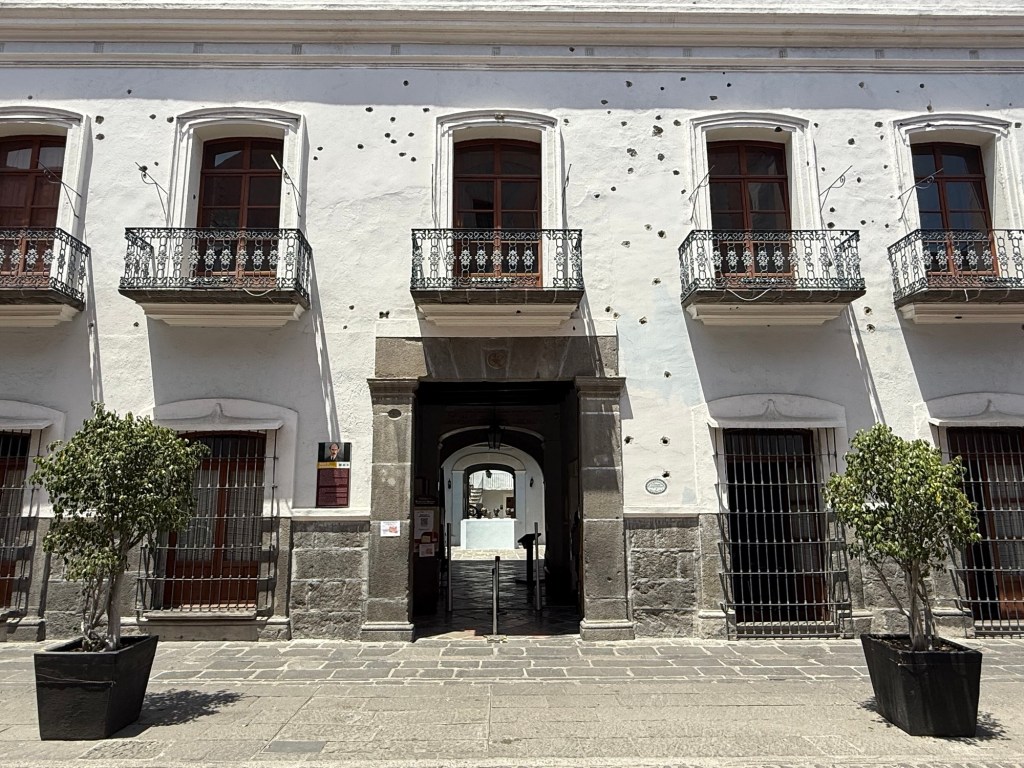
This was the home of the Seridan family and it’s now known as the Museum of the Revolution. Aquiles Seridan was a ‘revolutionary’ who opposed Porfirio Diaz and his house was stormed by the police and he was killed. The Mehican Revolution had begun.
Let’s finish with something more cheerful. It’s party time in Puebla and my friends are dancing.
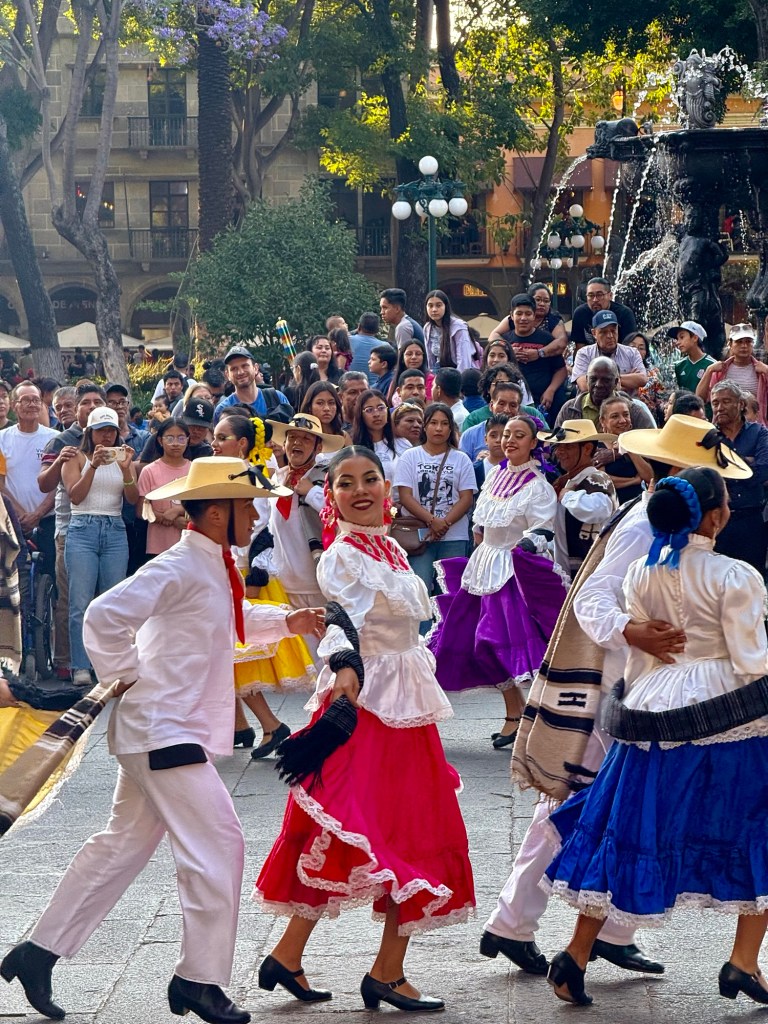

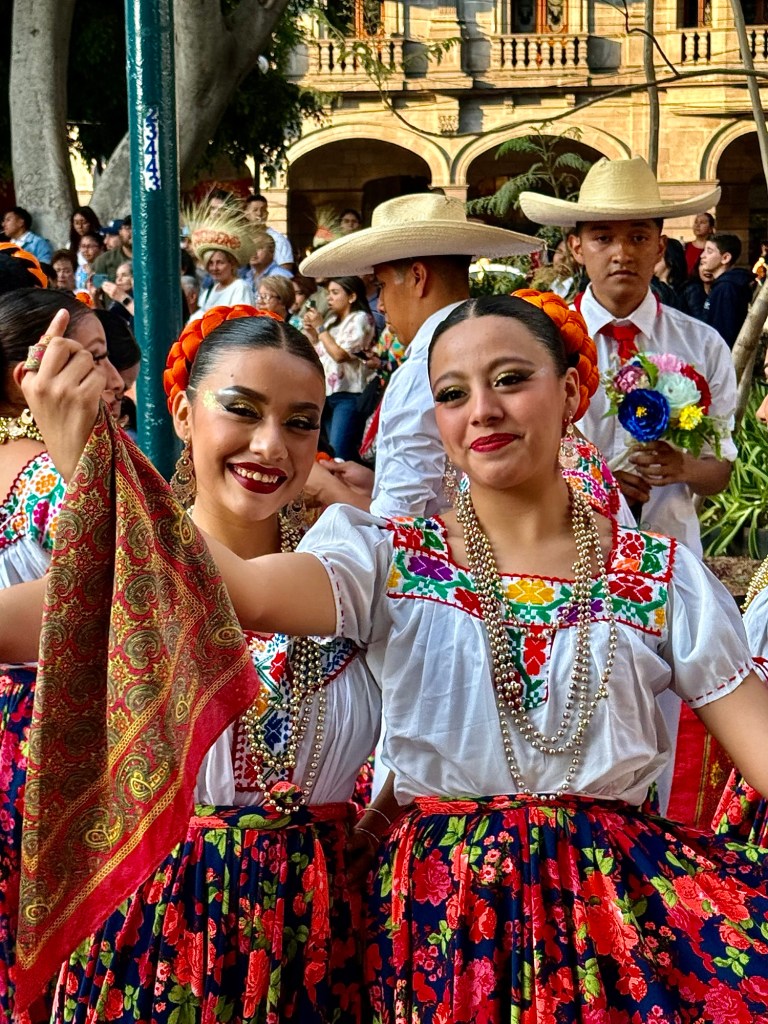
Viva Mehico!
 Biking The Americas Act IV